June 26 Jerusalem

I’m not attending evening events so I can rest and absorb the rich intellectual and spiritual banquet each day brings.
Last night’s outdoor panel, “Hope in Action: Young Israeli Leadership in a Divided World,” took place at beautiful Osher Plaza.

Daf Yomi #2: Talmudic Approaches to the Laws of Treifot - Elana Stein Hain
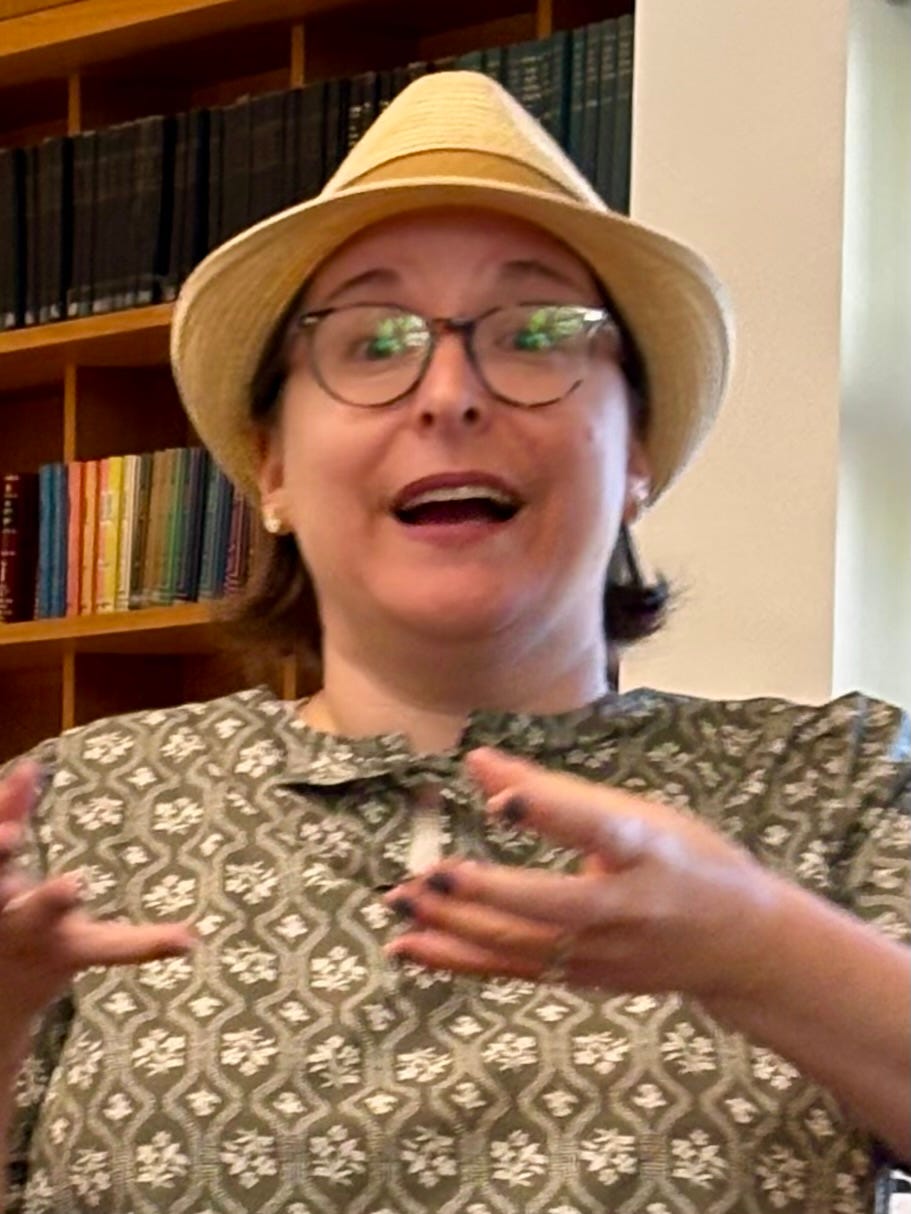
In today’s session, Elana explored how Jewish law holds the tension between divine command, rational explanation, custom, and rabbinic authority. The focus was minhag, or custom, which can become nearly as binding as formal law. Talmudic cases described rabbis determining when to correct communities who were making mistakes or being overly strict in observing Jewish law, and when silence and restraint would be wiser.
The cases illustrated how rabbinic leadership requires not only knowing the law, but also understanding when and what types of intervention could clarify, confuse, strengthen, or damage religious life. Elana highlighted how custom, law, and community knowledge are deeply intertwined, and how halachic responses depend on context.
Living As a Person of Faith - Elana Stein Hain
Elana explored her own experience of living with faith—emunah in the Jewish tradition—beginning with how difficult the word is to translate into English. Emunah resists being flattened into a slogan or comfort phrase, and is not an escape from suffering. It doesn’t bring certainty, or the promise that things will turn out well.
Rather, emunah is a way of standing in relationship to God as Creator, to God’s presence within history, and to covenant—the binding story of the Jewish people, who are accountable to God and one another.
For her, faith must be renewed daily, and has matured amid personal crises, rising antisemitism, and war. These challenges have left her more humble, less sentimental. Doubt, protest, and wrestling with God are part of her emunah, which coexists with anguish and mystery.
She contrasted emunah and bitachon. Emunah is the sense that God exists, that life has meaning beyond what we see, and that the Jewish people stand in an ongoing relationship with God. Bitachon connotes trusting that things will turn out well. Emunah does not require us to deny tragedy, or wear a veneer of toxic optimism that pretends suffering is good or easy.
Jeff asked how faith relates to zealotry, and how we should respond when we encounter it. Elana offered that zealotry carries the conviction of knowing something with utter certainty. She affirmed that we must continue to build even when others become zealous, and that we can do little to stop it from forming. Zealotry shows us the importance of uncertainty and humility, and acknowledging that we are not omniscient.
She noted several anchors of faith. First was the conviction there is “something more.” Science, reason, and empirical knowledge are essential, yet do not encompass reality.
Collectivism was the second anchor. A Jew’s life belongs to a larger story that began before us and will continue after we are gone. This can be a difficult view for modern people to embrace, as it entails locating the individual within a people, a history, and a set of obligations.
The third anchor was not being alone. We can feel accompanied in prayer, held by tradition, or bound to others through shared covenant. Still, being not alone doesn’t bypass loneliness, grief, and fear. With emunah, we can sit with pain, listen honestly, and offer presence, humility, and care.
Faith holds that human beings are accountable, and calls us toward moral action—caring for the vulnerable, taking responsibility to better our world, and not assuming we know everything. Central to her moral vision are integrating commitment without fanaticism, and humility without paralysis.
Hearing about Elana’s experience of faith felt like a welcome invitation to live as if there is more than we can see, as if our intentions matter, and as though we are part of a larger story. I deeply appreciated hearing how emunah helps her stand inside distress and uncertainty while being held and shaped by covenant, responsibility, and relationship.
Processing Group Discussion of Palestinian Speaker
Before our processing group today, I spoke with Jeff about my response to Rana Fahoum’s presentation yesterday. He definitely understood, which was very helpful.
In the group, we were invited to share what was most present for us at that point. I spoke about how unsettled I felt after Rana’s talk, and how I found myself unable to fully support her goals since she did not mention the role that Palestinian terrorism has played in shaping Israeli fear, mistrust, and the barriers to the citizenship she envisions.
Several participants nodded, while a few disagreed; one even accused me of equating Rana with terrorists. Regardless, I felt better for having spoken.
Jeff then shared powerful points that were deeply appreciated by some and completely ignored by others.
He argued that Hartman should explicitly state, as he has told the Institute in the past, that their Palestinian speakers are not representative of all Palestinians or of all non-Jewish Israelis. He emphasized the diversity among Druze, Bedouin, Christian Arabs, Baha’i, Israeli Arabs, and other communities. He felt that without this clarification, Hartman risks flattening those differences into a single minority experience or narrative of grievance.
He also expressed concern that Rana seemed to separate citizenship from national service—describing her work at Hartman as her contribution, while rejecting other forms of national service.
For Jeff, rights come with responsibilities, and he was troubled by what he perceives as a recurring lack of self-reflection or willingness to share responsibility for the conflict in the Palestinian voices Hartman has featured.
He argued that Jews often take on excessive blame, which he believes does not advance peace or help Palestinians. He called for clearer expectations: demilitarization, no right of return, and participation in a broader peace framework.
His practical takeaway was that we should return home prepared to explain these complexities more honestly.
I’m so glad Jeff and I were assigned to the same processing group!
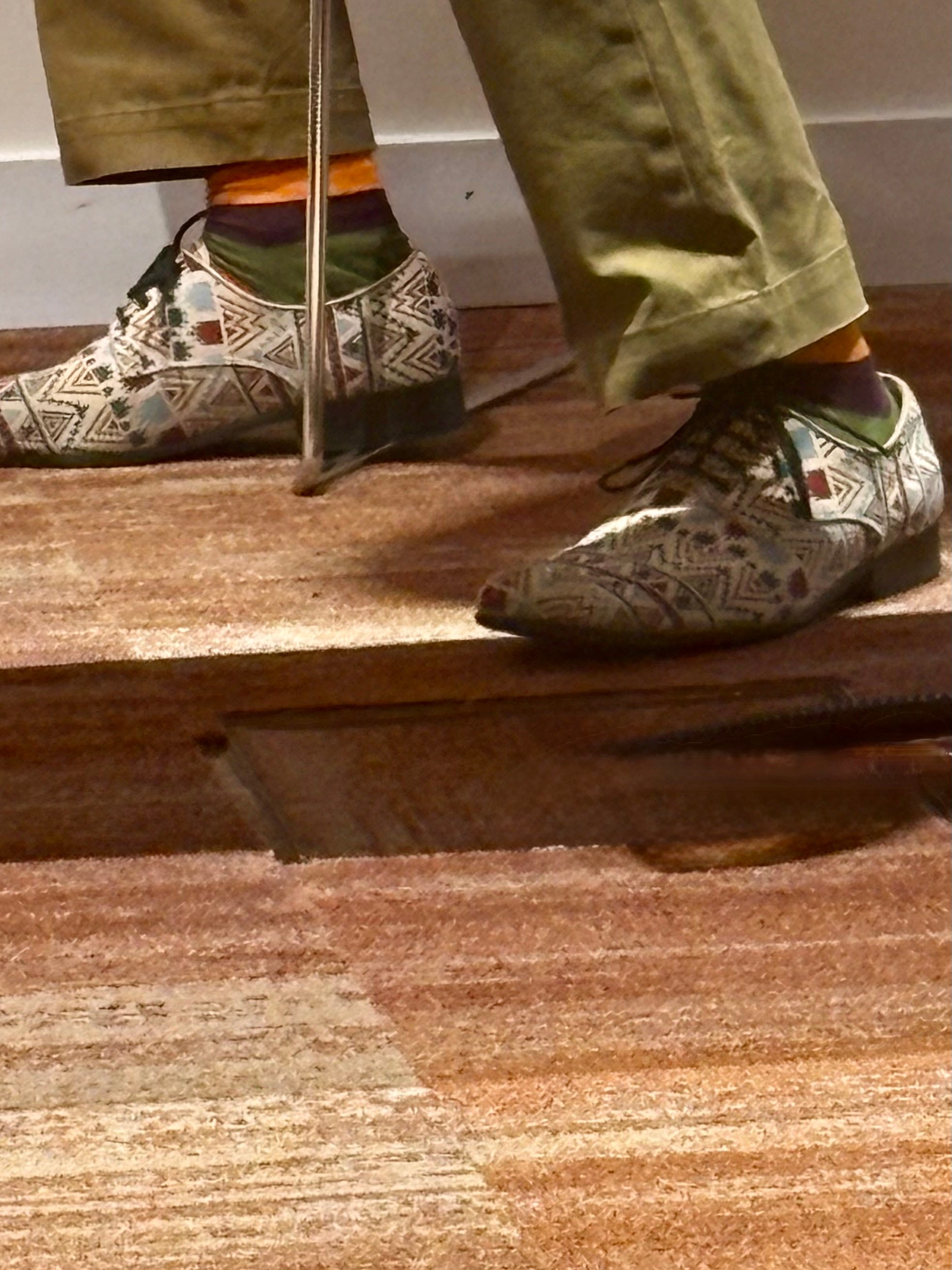
Our facilitator wears very interesting shoes.
Thank you so much Deborah. You have been a wonderful partner and Hevruta mate through our time together at Hartman. Your reflections and insights inspire me and we can bring this energy back to our beloved community. Your notes on Elana are masterful and she has helped both of us connect to Faith with a fresh, inviting voice.
I love that you have a voice at Hartman!!! I’m so proud of you (and Jeff) for speaking your truth.