June 29 Jerusalem

Daf Yomi #3: Agadah, Nature, and Law in the Talmud - Elana Stein Hain
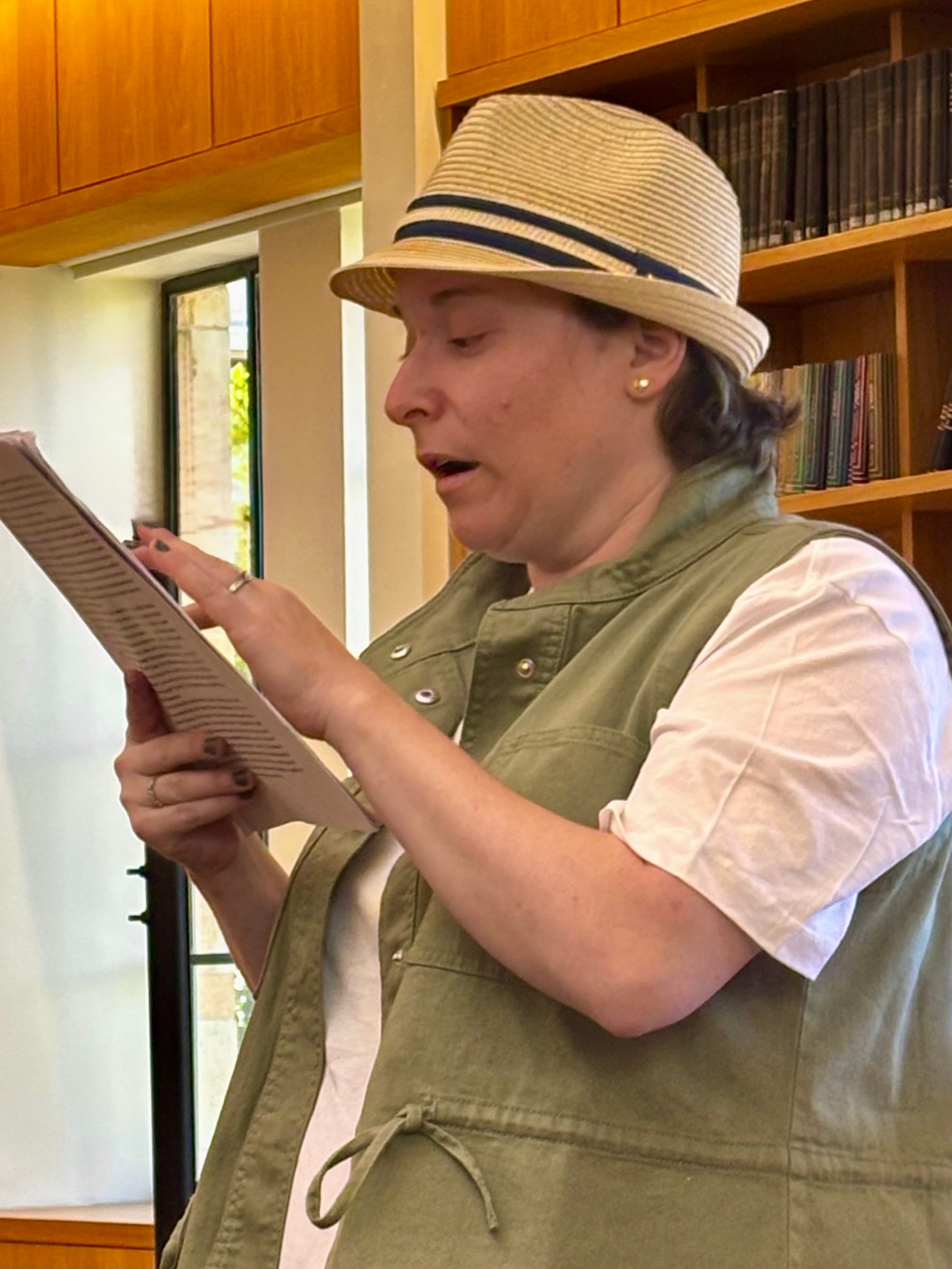
In today’s Daf Yomi, we saw how aggadah, the Talmud’s narrative component, can deepen halachic discussion by giving legal categories theological depth, imaginative force, and moral weight. Stories about trees, grasses, animals, and creation can become ways of thinking about law. Nature is portrayed as ordered by divine command, with each species keeping its proper boundary. Even plants are imagined as reasoning like rabbis, using legal logic to understand kilayim—the laws that require them to remain distinct.
The larger theme is separation as a form of sacred order. Kashrut, grafting laws, and prohibitions against mixing species all reflect a concern with boundaries: between kinds of food, plants, animals, and even between Israel and surrounding peoples. At the same time, the discussion asks whether separation always protects diversity, or whether mixing can also honor difference. Rabbinic thought presents nature not as wild, magical, or divine in itself, but as obedient to God—an example for human beings.
The story of the moon’s diminution enriches this framework. The moon protests being made smaller than the sun, and God responds with consolation, dialogue, and a request for atonement. This illustrates a shift from simple obedience to a dynamic interaction between God and nature. Nature can protest, God can listen, and God’s response can include humility. Stories like these reveal the Talmud’s legal and spiritual vision: law is not only about rules, but also about relationship, order, challenge, and response.
The Post October 7th Jew - Yossi Klein Halevi and Sarah Hurwitz


Yossi and Sarah explored Jewish peoplehood in the shadow of October 7. They argued that Jewish identity cannot be reduced to religion alone; it is also family, civilization, tribe, history, solidarity, and shared fate.
In the aftermath of the Holocaust, the Jewish people chose recovery through power: hard power through sovereignty and military self-defense in Israel, and soft power through Diaspora influence, coalition-building, philanthropy, and public engagement. That recovery was both spiritual and political: it offered Jews a future after catastrophe, and also created new moral burdens.
The conversation focused on how October 7 intensified the assault on the Jewish story of post-Holocaust recovery. Yossi and Sarah described antisemitism as changing with each era, targeting Jews as symbols of whatever a society most fears or despises. Today, Jewish power is often branded as settler colonialism, white privilege, apartheid, and genocide.
Holocaust education, they argued, has left many young Jews unprepared for antisemitism that appears as anti-Zionism rather than neo-Nazism. The Holocaust itself is now being weaponized against Jews through accusations of genocide and Nazi comparisons.
Both speakers warned of internal fragmentation, especially from Jewish anti-Zionists, and the shrinking of Judaism into a private faith or social justice framework. They noted that today’s Jews are expected to disavow or apologize not only for Israel’s actions and its very existence, but for their own Jewish identity.
To counter these terrible trends, Yossi and Sarah challenged us to reclaim Zionism as the very heart of Jewish peoplehood, not merely as support for the state of Israel. They urged us to tell the Jewish story in its fullness—both trauma and resilience, victimhood and responsibility, statehood and peoplehood, survival and renewal.
The Sovereign and the Warrior - Michal Hartman
I did not take notes on this presentation by Michal Hartman, Donniel’s daughter, so my recollections may be distorted. My general impression is that I found it rather thin and trite. Michal seemed to bemoan the IDF’s behavior without specifying what should change. I noticed a few people walk out before it ended. A couple seated near me said, “That was very mediocre,” as they left. At the same time, those who remained and asked questions seemed very enthusiastic and appreciative of Michal as a speaker, and equally concerned about the IDF’s conduct and Israel’s future.
Processing Group Reports on June 28 Field Trips
The Ministry of Foreign Affairs - Tal Becker
Participants met with diplomats who are career professionals, not political appointees, many with decades of experience in posts around the world. Their steadiness stood out, especially given the pressure under which they are working.
The meeting highlighted the difficulty of defending Israel on several fronts at once: military, legal, media, social media, and diplomatic. Legal threats loom not only from the ICJ and ICC, but also from various countries that target individual Israeli soldiers. A small legal team has so far managed to keep many of these from reaching trial.
At the same time, Israel appears to be investing more seriously in public diplomacy, including a new, well-funded department focused on social media, artificial intelligence, and targeted international outreach.
Still, the most hopeful strategy they recommended was bringing people to Israel, where direct experience can shift perception more powerfully than argument or messaging alone.
80 Years Later: Processing the Holocaust - Yossi Klein Halevi
Participants found the visit to Yad Vashem with Yossi deeply meaningful—especially those with family connections to the Holocaust. The Righteous Among the Nations section highlighted human bravery amid catastrophe, and showed how complex, and often subjective, the recognition process can be. Both Yossi and several participants were frustrated by Yad Vashem’s caution around October 7, and its difficulty in addressing accusations of genocide now faced by Israel. They felt the institution was struggling, and failing, to connect Holocaust memory to the present moment.
Civic Life, Activism, and Democratic Culture - Ronit Heyd
In Ein Karem, participants were struck by grassroots activism around practical quality-of-life concerns like environmental preservation, neighborhood safety, traffic calming, and community organizing. The visit also raised questions about historical memory, including the proximity of Deir Yassin and the fate of former Arab residents.
Ronit expressed concern that in Jerusalem, images of women are being torn down as immodest. I noted that in Jerusalem’s more modest public sphere, I objectify my own body far less than I do in places like New York or Los Angeles, where public space is flooded with female imagery designed to drive consumption.
On the Seam Line - Rana Fahoum
This outing offered moments of hope through discussion of initiatives bringing Jewish and Arab communities into relationship, especially through school partnerships and educational collaboration. Participants valued these efforts to build trust, cooperation, and daily contact between communities that often live side by side yet remain socially divided.
At the same time, several who went on this field trip thought Rana’s presentation lacked nuance. They were troubled by some of her language, such as “expelled,” “genocide,” and “apartheid,” and felt the visit leaned far too heavily toward a pro-Palestinian narrative. For them, the discussion lacked balance, context, complexity, and the acknowledgment that while Israel, like every country, has real problems, it cannot be reduced to its failures.
Although the outing raised tough questions about the challenges of communicating with adequate thoroughness and nuance, another participant felt that Rana’s courage, coexistence work, and willingness to remain in relationship across deep divides offered a living counterexample to the claim that Israeli society is monolithic.
Processing Group Evaluations and Closure
Although another day remains in the CLP, participants in our processing group were invited to reflect on the strengths and shortcomings of the program. They considered the strongest moments to be those when complex questions were framed clearly and practically. In particular, Yossi Klein Halevi’s language around survival, morality, and the risk of oppressing others as Israel fights for its existence provided a useful framework to take home. Attendees found his support for Jewish power especially valuable, as well as how he holds together the imperatives of survival and moral responsibility. Many enjoyed their conversations at meals, the renewed sense of Jewish identity they felt, and the opportunity to think together with a serious Jewish cohort.
At the same time, several strongly felt that the Hartman program did not rise to meet the current moment. They had hoped to hear from a wider range of voices, such as journalists, former generals, right-of-center Israelis, non-Jewish Israelis, and people outside Hartman’s liberal North American frame. Some felt the CLP was like an echo chamber that presented a narrow version of Jewish identity, and failed to expose them to the actual diversity of Israeli society. They were frustrated when sessions did not live up to their titles, avoided the urgency of now, and seemed to offer sermons rather than engagement.
An overarching critique was that the programming and speakers lacked courage, breadth, and responsiveness. Participants wanted guidance to help them lead today, not in a utopian or pre-October 7 world. They wished for clearer language, more open disagreement, more direct moral and political engagement, and more receptivity to participant feedback. In light of the Institute’s claim to be pluralistic, attendees felt it should stretch its audience beyond the voices and perspectives they already know.
I’m still glad I came. I was grateful to hear these reflections voiced so honestly, because they helped name much of what I too had been feeling. Although the program did not meet all my expectations, the seriousness and dedication of the staff and participants were palpable. The willingness of those in my processing group to speak plainly—and the invitation from our facilitators to do so—made the experience far more meaningful.
I hope to return next year, and would encourage anyone curious to attend. I really enjoyed the seriousness of the learning, and being exposed to so many Hebrew and Jewish texts in a living and memorable way. I’m grateful for the kindred souls I met, and the chance to speak openly and be heard. It will be interesting to see what impact our feedback might have. The critiques offered were respectful, caring, and definitely held by many.
I feel all the more appreciation for our community at Kol Shofar—how we dare to have difficult conversations, welcome multiple perspectives, and do our best to sort through them in the spirit of friendship and goodwill.