June 30 Jerusalem

I entered the Shalom Hartman Beit Midrash this morning feeling low.
I was troubled by the CLP critiques—not because they had been voiced, but because I agreed with them. I found myself questioning whether I wanted to invest the resources to attend again next year.
At this point, however, I realize I am not ready to give up on Hartman.
This organization has significant reach, major donors, and substantial impact. I would like to see it evolve in ways that foster connection and support initiatives among people whose viewpoints were not well represented here this summer.
I believe a number of teachers and staff would resonate with that vision, even though I realize it is not the apparent center of gravity right now.
I would also like to come back because I feel drawn to the challenge of communicating respectfully about issues that haunt me, and participating more courageously on behalf of what I care about, rather than turning away in frustration.
There is too much of value here to ignore.
Daf Yomi #4: Kashrut, Birds, and the Case of the Turkey in Jewish Law - Elana Stein Hain
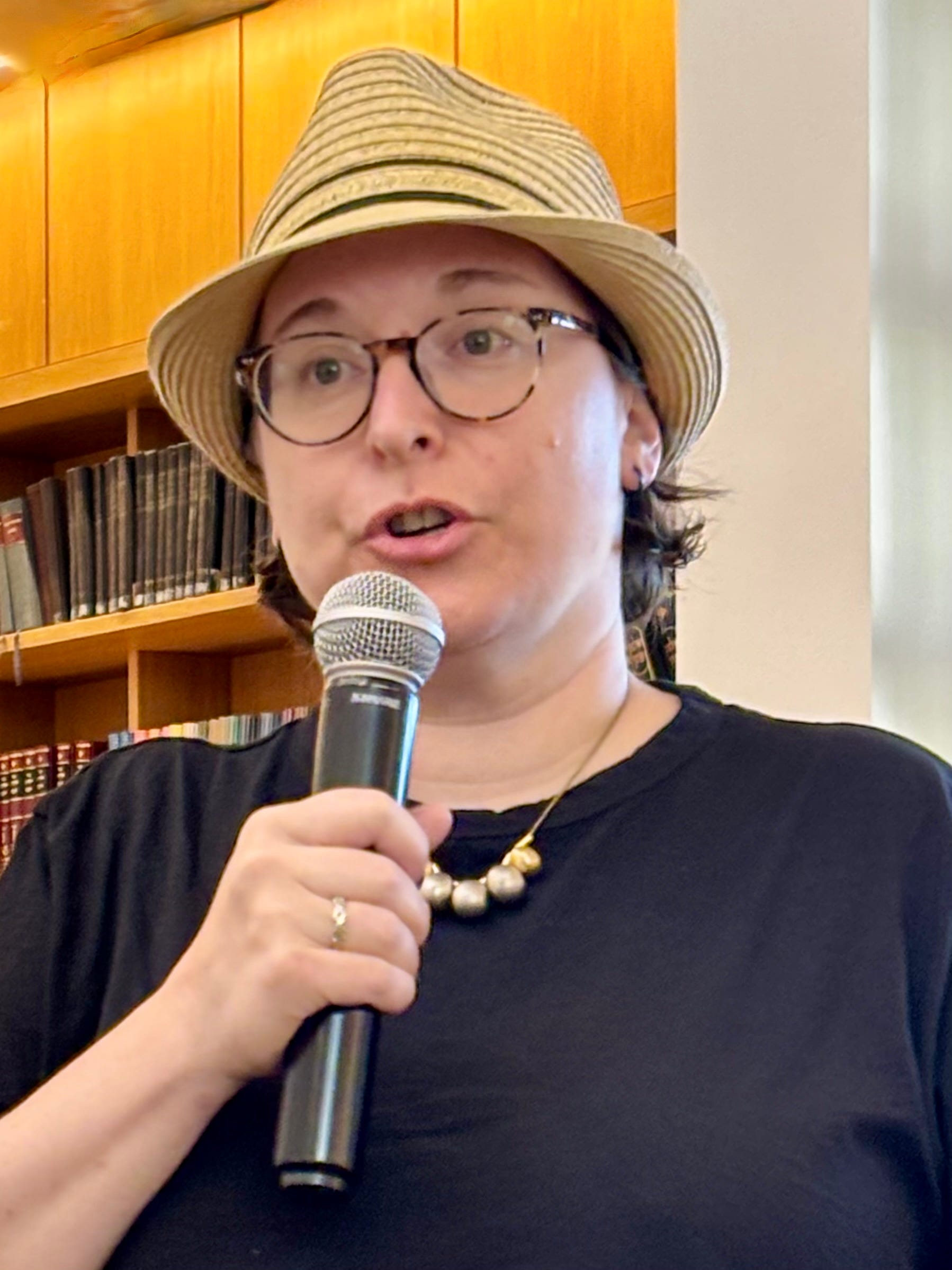
I’m going to miss Rabbi Elana and these Daf Yomi sessions very much. She is so bright and literate, so clear, warm, and friendly—a lovely human being and a spectacular teacher.
Our final meeting today explored the category of kosher birds, and especially the turkey, to illustrate how Jewish law is informed by sacred text, inherited tradition, and the lived experience of the Jewish people. Although the Torah gives clear signs for assessing the kosher status of fish and land animals, it doesn’t provide these for birds. Instead, it offers a list of forbidden birds, and the Talmudic rabbis attempt to discern the principles underlying that list.
Their efforts require careful discernment: reading closely, honoring inherited wisdom, and probing to understand how God asks us to live. They make keen observations, test assumptions, argue through possibilities, and refuse to narrow their investigations. Why? Because kashrut is about order, humility, and the longing for a beautiful and godly life—as well as what may be eaten.
The turkey is a vivid example of Jewish law encountering new realities. What began somewhere as a new food practice eventually became an accepted tradition. Jewish law is thus living and responsive, faithful and adaptive, grounded in sacred text while shaped by the wisdom of the Jewish people. With Rabbi Elana, studying Talmud is like a dance in service of a life made sacred.
The Crusader - Masua Sagiv
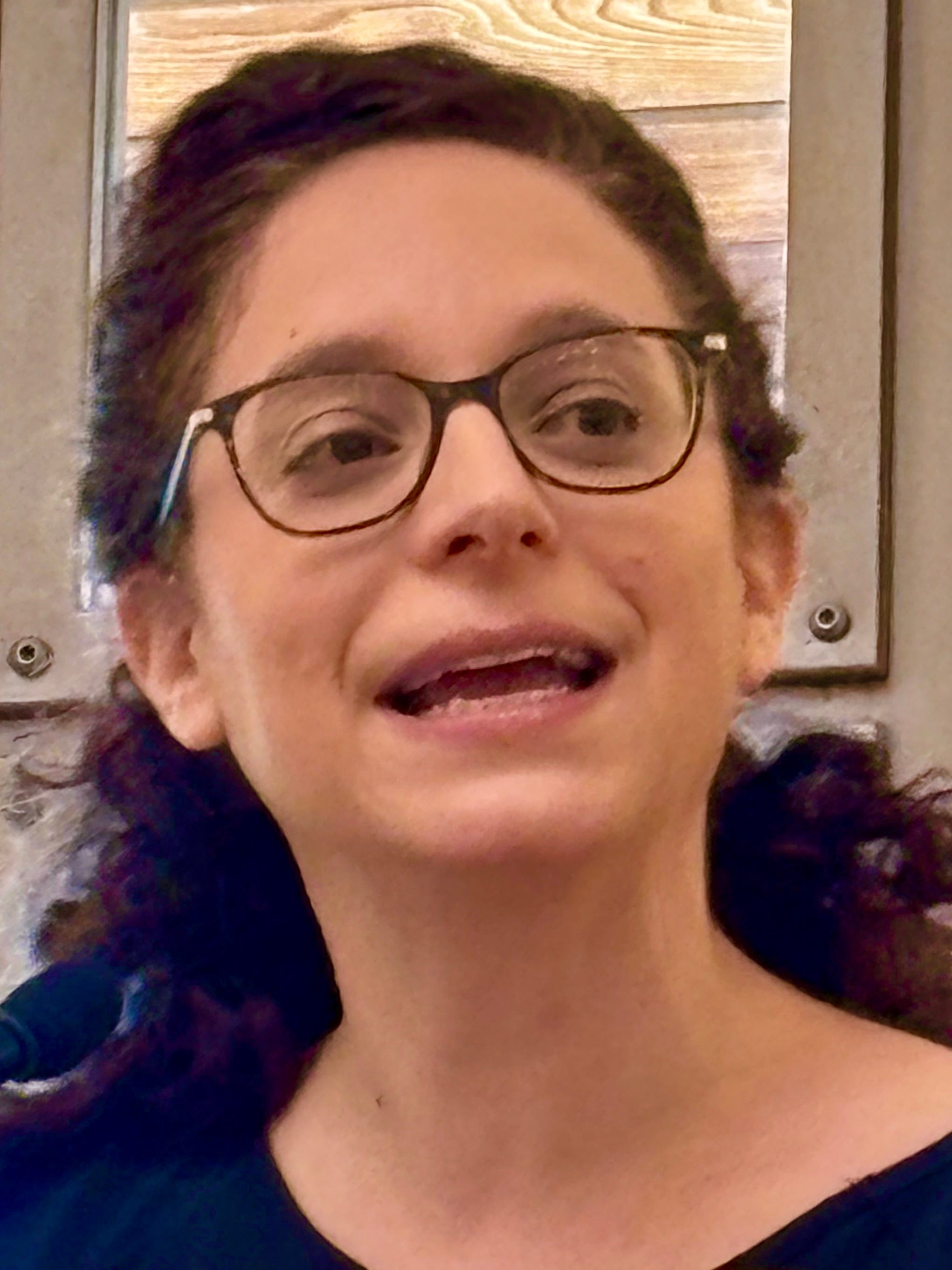
Anger can be a moral force. It alerts us that something is wrong, that the world has violated what we know to be just. In leadership, anger can awaken courage, sharpen moral clarity, and move people from despair towards action.
But anger is dangerous when it becomes total. It can harden into a fixed identity, divide the world into enemies and allies, and burn away empathy, humor, humility, and self-reflection. What begins as a response to injustice can become its own form of destruction.
True leadership requires anger held by empathy. Anger lends urgency, while empathy preserves humanity. Together, they allow leaders to confront injustice without becoming consumed by it, to act with moral force without losing compassion, and to build rather than burn.
In addition to these philosophical points, Masua shared that she had joined the Seam Line field trip led by Rana Fahoum, and noticed her own response to some of the language that Rana had used, such as “expulsion,” “genocide,” and “occupation,” as well as some of the language that was absent, such as “terror” and “terrorism.” She referred to this moment as a time she determined that listening would be wiser than speaking.
Later, she suggested that we would do well to err on the side of restraint when anger might further fragment the Jewish community, and to err on the side of respectful expression when anger points toward an injustice or a mischaracterization of Israel or the Jews.
After her talk, I wrote to ask her how that principle related to the example she cited from the Seam Line tour. I also mentioned that several people in my processing group went on that tour, and many seemed to have a reaction similar to hers (and much stronger) about Rana’s choice of language.
I told Masua that what concerns me is that these responses may not be reaching Rana, or the Hartman staff who could help think them through. I said I wasn’t sure whether that silence comes from fear, politeness, uncertainty, or simple delay. But because the concern was voiced by a number of people in my group, both in response to Rana’s presentation on The Citizen, and to her field trip, I said it seemed important that it be brought forward in some form.
I asked for any thoughts she might have about how to discern when restraint is called for and when respectful expression becomes necessary, both in general and in relation to that particular example.
I had been troubled during her presentation about why she chose this example, and by her decision not to speak up. But I myself was unable to speak up during the Q&A segment to ask her about it! I felt good about handling it in writing after taking time to gather my thoughts.
The Empowered Jew - Tal Becker
This presentation was, for me, the pinnacle of the entire week.
Tal began in a deeply human and vulnerable way, sharing his own despair and fear, and welcoming ours, about what it means to be Jewish now. He then took us on a journey, supported by biblical passages and exquisite literary excerpts, toward a rousing call to awaken our courage—and then to invite any bravado to soften into compassion and faith.
It was an absolutely masterful tour de force.


A few highlights:
What does it mean to be an empowered Jew when we feel so vulnerable, exposed, and diminished?
Tal shared his own fear, his instinct in Paris to conceal his daughter’s Star of David necklace, his anxiety about raising Jewish children in a hostile world, and his pain at being reduced in public to a stereotype rather than seen as a full human being.
When circumstances feel overwhelming, he asked, do we still have agency? Can human beings shape reality, or are we merely acted upon by forces larger than ourselves?
He turned to Genesis in a sustained meditation on this question. Adam blames Eve. Eve blames the serpent. Cain refuses responsibility for Abel. Again and again, the early stories of the Torah show human beings avoiding accountability. God is disappointed in humanity, which we especially see in the flood narrative.
Yet the Torah does not abandon hope that people can become responsible moral agents--a hope begins to take fuller shape in Judah.
Judah is imperfect, but he steps forward. He intervenes for Joseph, admits his wrongdoing with Tamar, and offers himself in Benjamin’s place. He becomes the figure who says, in effect: I am responsible. I will stand here. I will answer for my brother.
In this reading, Jewish identity is rooted in Judah’s moral posture. To be a Jew is to be made of “Judah material”: not flawless, not guaranteed to succeed, but willing to show up, take responsibility, and act.
Tal suggested that the spelling of Judaism be changed to Judahism.
The Jewish response to fear should not simply be, “How worried are we?” but “What will we do?”
Judaism does not promise that agency will save us from danger or ensure victory. It asks something harder and more dignified: that we refuse to surrender our humanity, our moral compass, or our responsibility, even when the outcome is uncertain.
Tal warned against the temptations of victimhood, conspiracy, and despair. Conspiracy theories are seductive because they explain suffering by locating power and blame elsewhere. Antisemitism often functions this way, allowing societies to avoid their own failures by projecting them onto Jews.
Judaism resists this escape from responsibility. It insists that even in a broken world, we must examine ourselves, choose our actions, and remain accountable. Anguish may be real, but it cannot become an excuse for passivity or moral collapse.
Tal rejected easy optimism. Drawing on figures like Viktor Frankl and Vasily Grossman, he framed dignity as the capacity to choose our stance, preserve our humanity, and act with moral seriousness even when our power is limited. The deepest question is not whether we can control history, but whether we can remain human inside it.
Even when we cannot guarantee success, we can still decide who we will be.
His closing vision was both sobering and inspiring. The rabbis themselves asked whether it might have been better for human beings not to have been created. Their answer was not sentimental. Now that we exist, we must examine our deeds. We must strive. We must take responsibility.
As descendants of Judah, Jews are called to show God and the world that humanity is still worth the investment—not because we can overcome every threat, but because we can refuse to relinquish agency, responsibility, and the fragile, sacred kernel of human dignity.
In the Q&A that followed, Tal modeled this teaching in a deeply personal way. He reflected honestly on moments when he had not answered difficult or hostile questions as well as he wished. Instead of meeting a questioner with empathy, he said, he had sometimes felt trapped, and responded with self-righteousness or defensiveness.
That admission illustrated how accountability is not a fixed achievement, but a practice that must be renewed even after failure.
The session ended with a tender tribute to one of Tal’s best friends, who had passed away that very morning. Tal remembered him with affection and grief, and especially honored the man’s inexhaustible sense of responsibility for the Jewish people.
That moment was a quiet culmination of the entire session.
To be an empowered Jew is not to feel powerful all the time. It is to inherit and carry responsibility, even through fear, limitation, failure, and loss.
The discomfort of this week has indeed been productive!
Deborah, your reflections on your entire journey have been most beneficial to all your followers I talk to, and we can’t thank you enough!
Talk about masterful! Your insights and observations are priceless gems. Your willingness to share your doubts and concerns are signs of great courage!
Don’t be disheartened by the critiques of Hartman. It is a place of great heart, and great thinking. Showcasing their great thinkers is an absolute treat for the rest of us.
Your conclusion is absolutely right and very worthy of repeating: “I would also like to come back because I feel drawn to the challenge of communicating respectfully about issues that haunt me, and participating more courageously on behalf of what I care about, rather than turning away in frustration.
There is too much of value here to ignore.” Thank you so much!